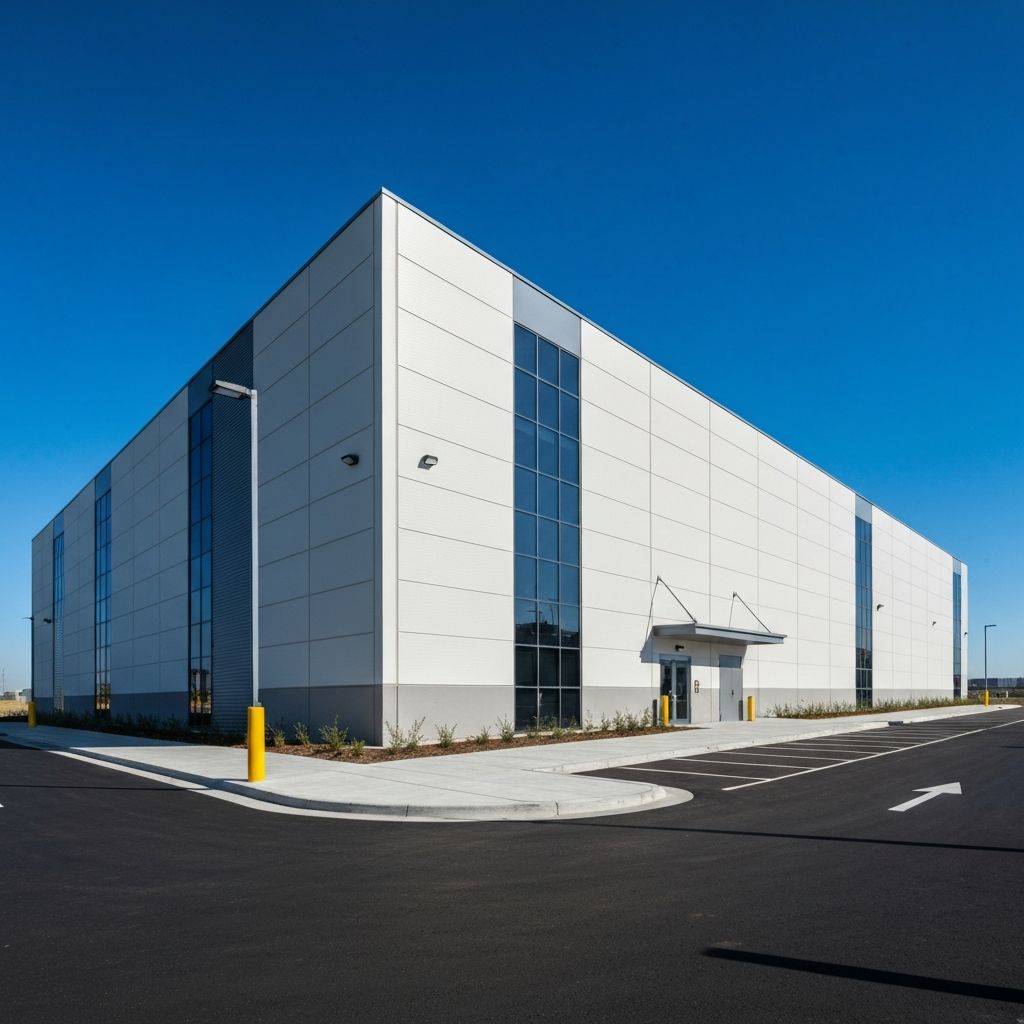
Data Center Projects
High-Performance Building Envelope & Fire Protection
Data centers require a higher level of precision, coordination, and performance than typical commercial construction. These projects are schedule intense—tight timelines demand contractors who can execute without delays. These facilities are highly sensitive to air leakage, moisture intrusion, thermal inefficiencies, and fire risk—making the building envelope and fire protection systems critical to long-term operation and reliability.
Our Approach
We provide a full scope of services tailored specifically to data center construction, including thermal insulation, air barrier systems, rainscreen systems, and passive fire protection. Our team understands the level of coordination required on these projects and installs systems to meet strict performance standards, sequencing requirements, and inspection protocols.
Why Data Centers Are Different
Unlike standard commercial buildings, data centers operate with continuous loads, controlled environments, and zero tolerance for system failure. Even minor issues within the building envelope can impact performance, efficiency, and equipment lifespan.
- Very schedule driven with tight timelines and no room for delays
- Strict control of air leakage and pressurization
- High sensitivity to moisture intrusion and condensation
- Continuous thermal performance requirements
- Complex coordination with MEP and structural systems
- Increased inspection and documentation requirements
These factors demand a contractor who understands not just installation, but system performance.
Our Scope in Data Centers
We perform a wide range of building envelope and fire protection systems specifically suited for data center environments:
- Spray polyurethane foam insulation for continuous insulation and air sealing
- Fluid- and sheet-applied air barrier systems for full envelope continuity
- Rigid and mineral wool insulation systems for exterior wall assemblies
- Rainscreen and high-performance facade insulation systems
- Firestopping for high-density penetrations and MEP coordination
- Intumescent coatings and fire protection systems for code compliance
- Perimeter fire containment systems
Our ability to self-perform multiple scopes reduces trade overlap and improves overall project efficiency.

Coordination & Execution
Data center construction involves a high level of trade overlap, particularly with mechanical, electrical, and low-voltage systems. Our team works closely with all trades to ensure that insulation, air barriers, and fire protection systems are installed correctly around penetrations, supports, and equipment. We prioritize strict schedule compliance—our coordination and execution approach is designed to keep your project on track.
- Coordination with MEP trades for penetrations and routing
- Sequencing installations to align with fast-paced schedules
- Maintaining continuity at transitions and system interfaces
- Supporting inspection, testing, and documentation requirements
We understand the importance of getting it right the first time, especially in environments where rework is costly and disruptive.
Performance & Reliability
The systems installed in a data center are expected to perform consistently over time without failure. Our approach focuses on delivering assemblies that meet both code requirements and long-term performance expectations.
- Continuous building envelope systems to reduce energy loss
- Moisture control strategies to protect critical infrastructure
- Fire protection systems that meet strict life safety standards
- Installation aligned with manufacturer specifications and tested assemblies
Why It Matters
In data center construction, the building envelope is directly tied to operational performance. A properly installed system helps ensure:
- Stable internal conditions for sensitive equipment
- Reduced energy consumption and operating costs
- Long-term durability of building systems
- Compliance with stringent project and owner requirements