Passive Fire Containment Systems
Commercial & Industrial Building Applications
Passive fire containment is a critical component of the building envelope and overall life safety system. Unlike active systems such as sprinklers and alarms, passive fire containment is built directly into the structure and is always in place to limit the spread of fire, smoke, and heat. Maintaining schedule compliance is essential—our team coordinates closely with other trades to ensure fire protection systems are installed on time without disrupting the overall project timeline.
Our Approach
We provide complete passive fire containment systems across commercial, institutional, and high-security facilities, with a focus on proper system selection, tested assemblies, and coordination with adjacent trades. Our work is commonly performed on complex projects such as data centers, government buildings, healthcare facilities, and large-scale commercial developments where code compliance and system performance are critical.
Passive Fire Containment Systems
Curtainwall & Perimeter Fire Containment
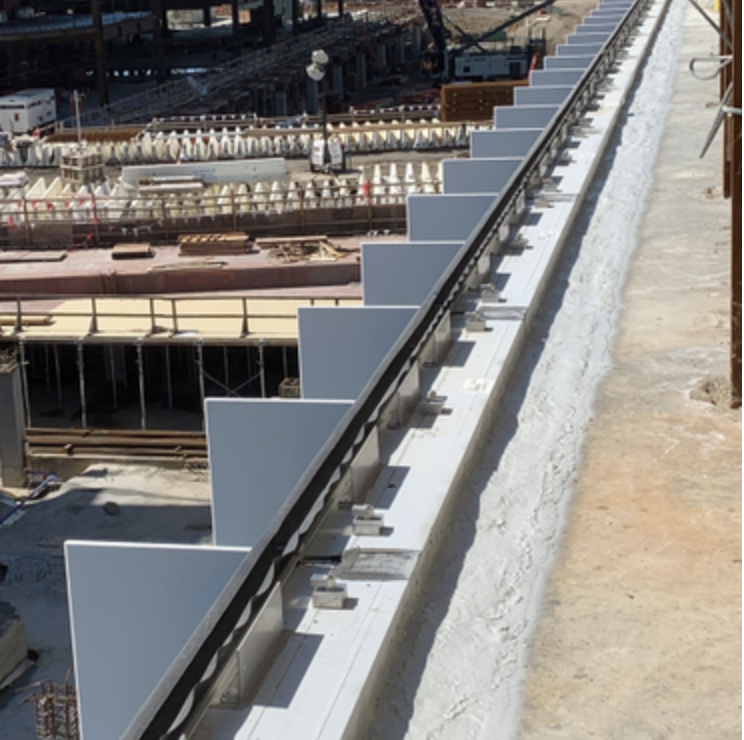
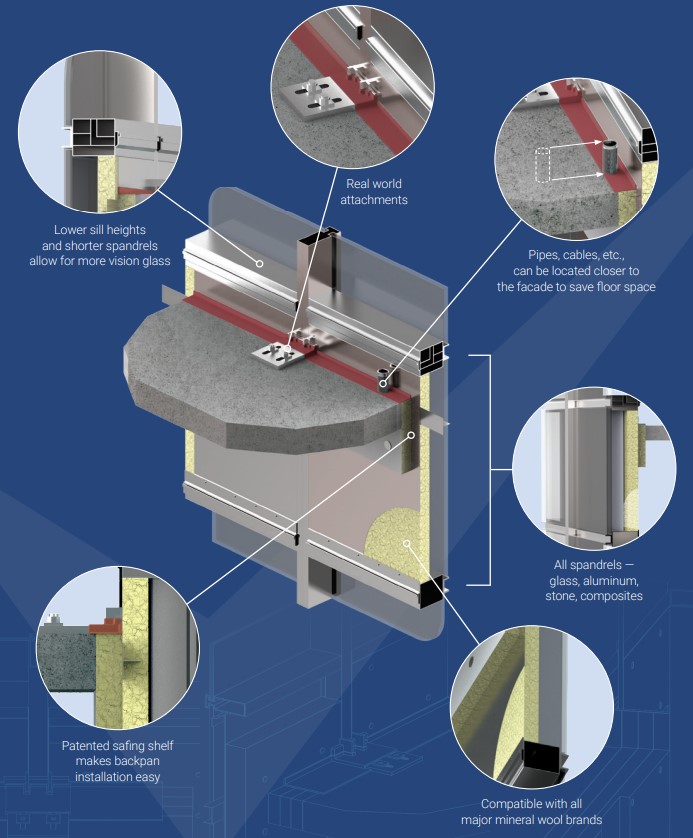
Curtainwall and slab edge conditions are critical points in the building where fire can spread vertically between floors if not properly protected. Perimeter fire containment systems are designed to seal the gap between the edge of the floor slab and the curtainwall assembly, maintaining the fire-resistance rating of the floor.
In addition to traditional perimeter fire containment systems, we install spray-applied protective insulation systems at curtainwall transitions to enhance thermal performance and protect these vulnerable areas.
- Slab edge fire containment systems integrated with curtainwall assemblies
- Mineral wool and fire-rated spray systems for perimeter protection
- Curtainwall protective spray applications to seal and insulate transitions
- Coordination with glazing, structural, and envelope trades
These systems are especially common in high-performance buildings such as data centers, government facilities, and large commercial towers, where both fire containment and thermal continuity are critical.
Firestopping Systems
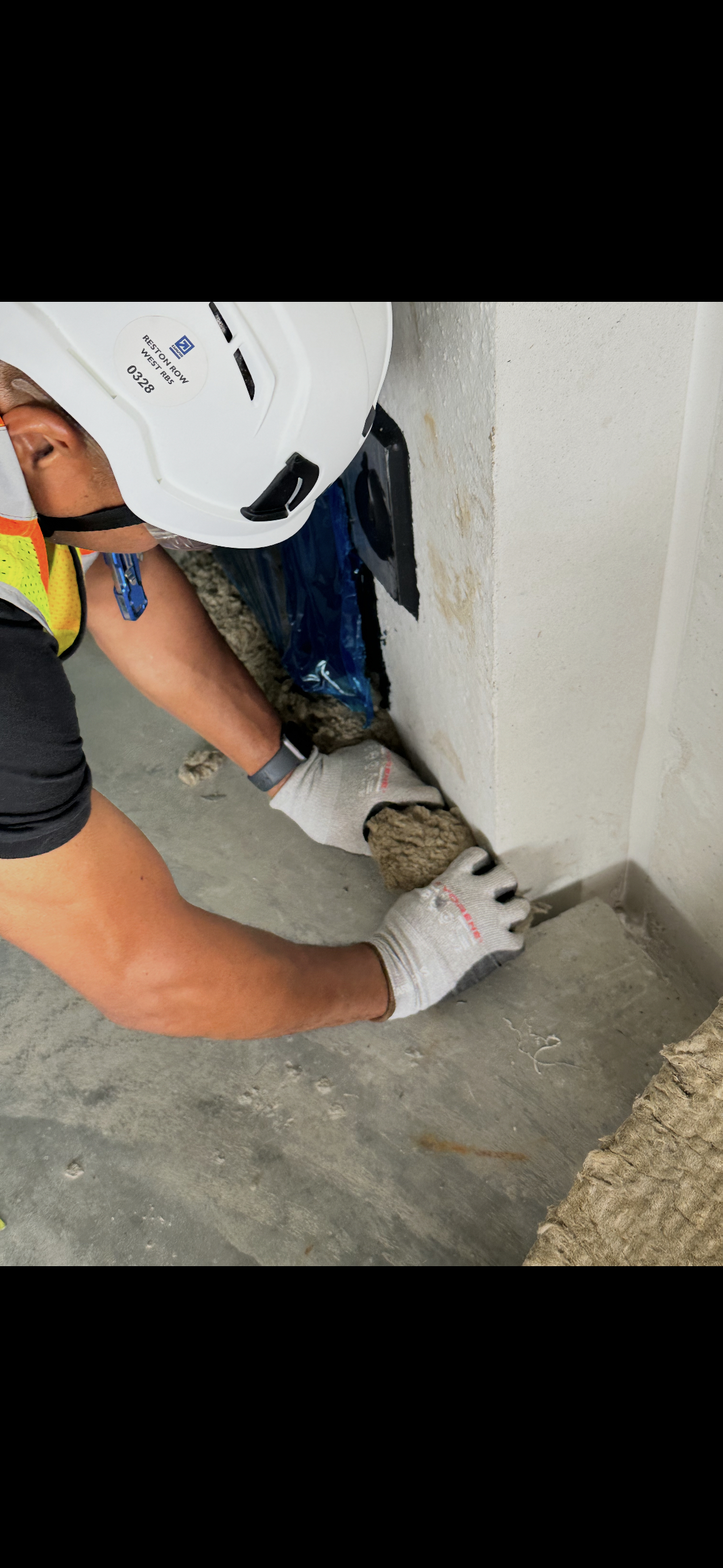
Firestopping is used to maintain the fire-resistance rating of walls, floors, and assemblies by sealing all penetrations, joints, and openings. These systems are not just materials—they are tested assemblies that must be installed exactly as specified to perform correctly.
We install firestop systems in accordance with UL-listed designs and manufacturer requirements, ensuring that each penetration or joint maintains the integrity of the rated assembly.
- Joint firestopping at slab edges, wall joints, and expansion joints
- Use of sealants, mineral wool, mortars, and pre-engineered systems
- Through-penetration firestopping for pipes, conduits, ducts, and cable trays
- Identification, labeling, and documentation for inspection and closeout
Proper firestopping is critical in high-density MEP environments such as data centers and government facilities, where the volume of penetrations significantly increases the complexity of the system.
Attention Curtainwall Contractors
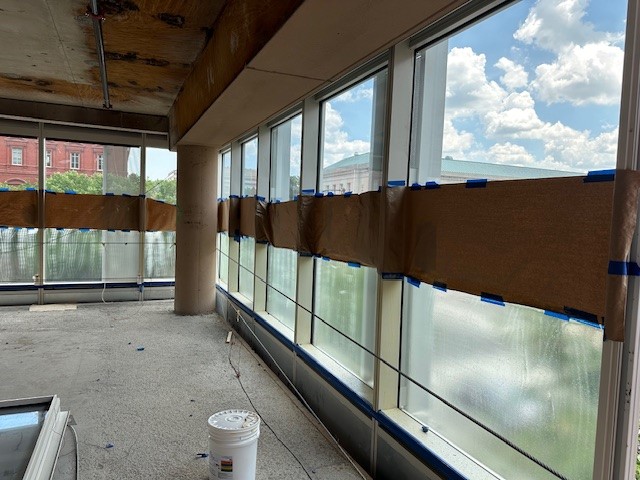
We furnish and install protective coatings for the curtainwall and related products during construction.
System Coordination & Compliance
Fire protection systems are only effective when installed as part of a coordinated assembly. We focus on:
- Installing systems in accordance with UL-tested assemblies
- Coordination with MEP trades for penetrations and routing
- Ensuring compatibility with air barrier and insulation systems
- Providing documentation, labeling, and inspection support
Our approach ensures that all fire protection components work together to meet both life safety requirements and overall building performance standards.