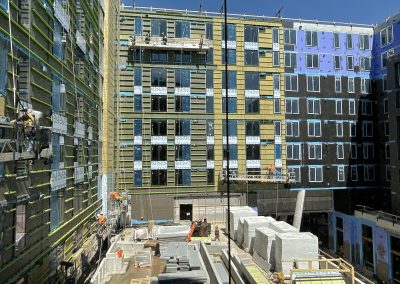
Rainscreen Systems
Advanced Exterior Wall Assemblies
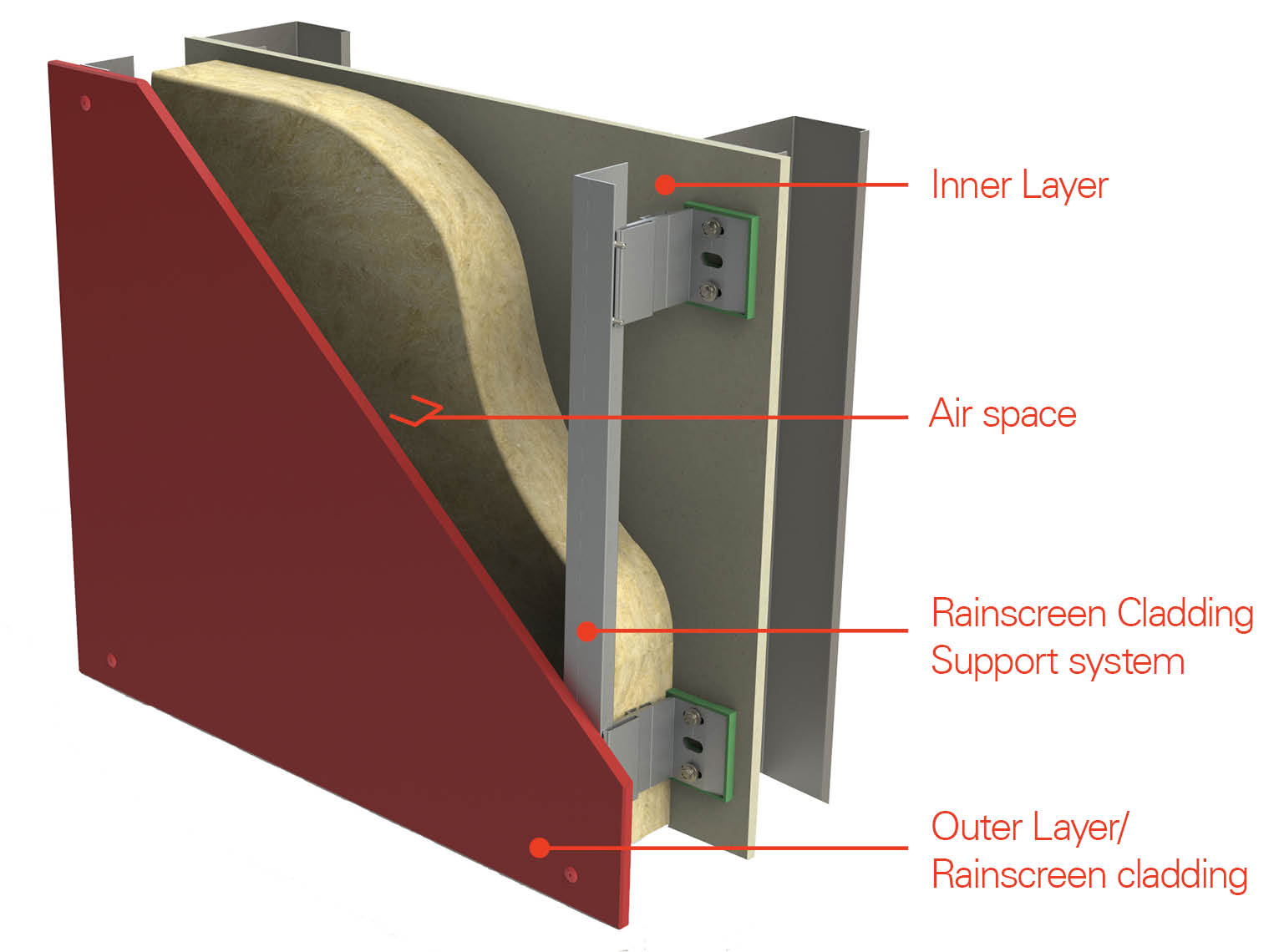
Rainscreen systems are designed to manage water infiltration while maintaining a high-performing building envelope. Unlike traditional wall assemblies, a rainscreen incorporates a ventilated cavity behind the exterior cladding, allowing water to drain and air to circulate, reducing the risk of moisture buildup within the wall system.
Our Scope
We install insulation and support components within rainscreen assemblies as part of a fully coordinated envelope system. Our scope focuses on maintaining continuous insulation, proper air barrier integration, and alignment with cladding attachment systems to ensure long-term performance.
How Rainscreen Systems Work
A rainscreen assembly separates the exterior cladding from the primary weather barrier, creating a drainage and ventilation space. This allows any moisture that penetrates the cladding to escape rather than becoming trapped within the wall.
- Ventilated cavity promotes drying and pressure equalization
- Water is directed out of the system through drainage pathways
- Air barrier remains the primary defense against air and moisture intrusion
- Continuous insulation maintains thermal performance behind the system
This approach significantly improves durability compared to sealed wall systems, especially in high-exposure environments.
Types We Offer
We install insulation and support components for a wide range of rainscreen cladding systems.
- Metal Panel
- Fiber Cement
- Terra Cotta
- Phenolic
- Metal Plate
- And More
Our Scope & Coordination
Rainscreen assemblies require precise coordination between multiple trades. Our role focuses on ensuring that insulation and air barrier components are installed correctly to support the overall system.
- Installation of continuous insulation behind cladding systems with thermally broken support systems or structural insulated sheathing
- Integration with fluid- and sheet-applied air barriers
- Coordination with girt, clip, and rail attachment systems
- Detailing at penetrations, transitions, and structural connections
Because cladding support systems penetrate the insulation layer, minimizing thermal bridging and maintaining system continuity is a key part of our installation approach.