Thermal Insulation Systems
Commercial & Industrial Building Applications
Thermal insulation is a critical component of the building envelope, directly impacting energy performance, moisture control, and long-term durability. The effectiveness of an insulation system is not just based on R-value, but on how it integrates with air barriers, structure, and adjacent systems to create a continuous, high-performing assembly.
Our Approach
We install a full range of insulation systems across different wall types and applications, selecting the appropriate solution based on building use, wall design, exposure conditions, and code requirements.
Spray Polyurethane Foam (SPF) Insulation
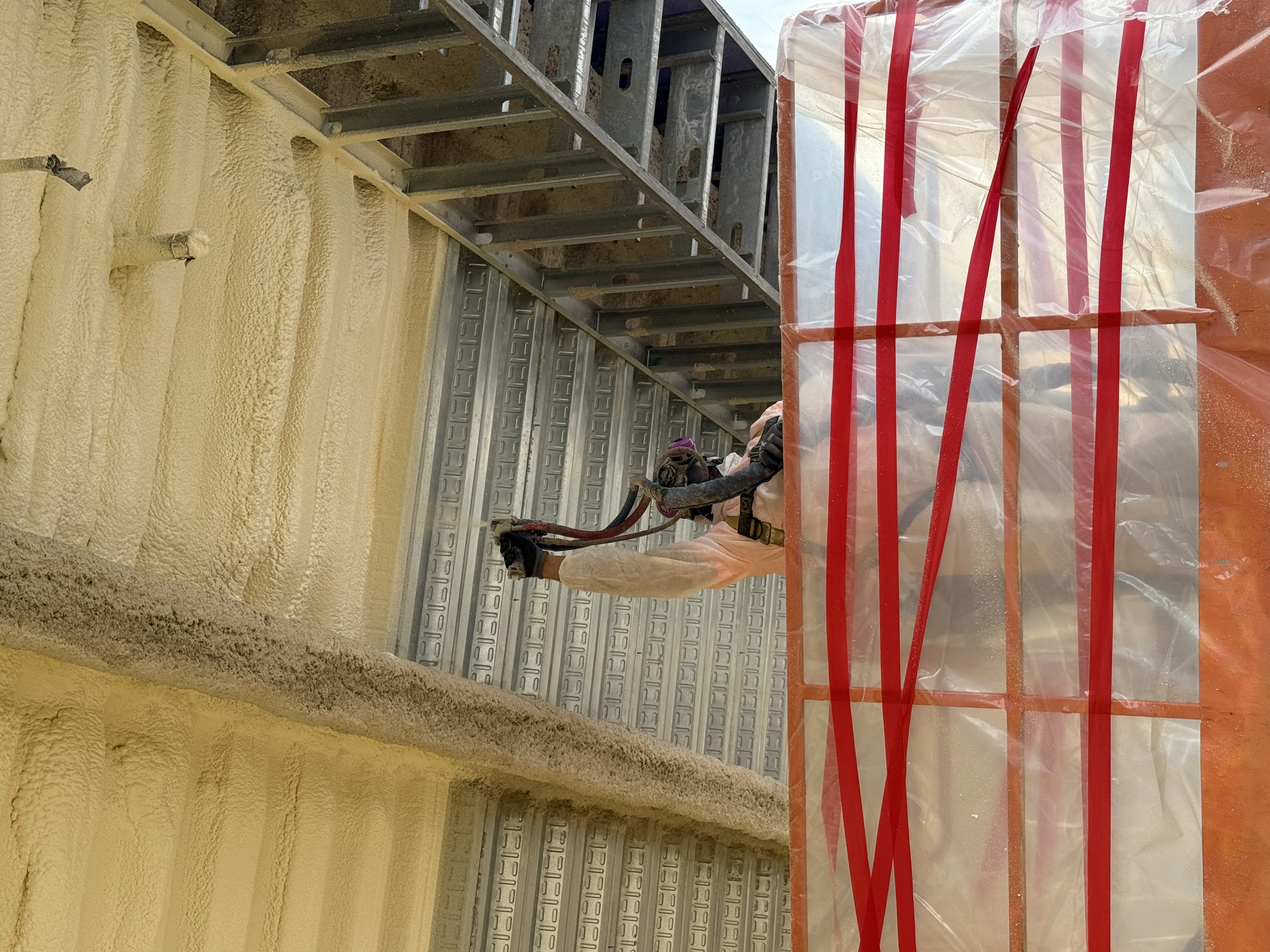
Spray foam is one of the most effective insulation systems for achieving both thermal performance and air sealing in a single application. Installed as a liquid that expands in place, it adheres directly to the substrate and fills voids, creating a continuous layer with no gaps or air pathways.
Closed-cell spray foam is typically used where higher R-values, moisture resistance, and structural reinforcement are required, while open-cell systems are used for interior applications where air sealing and sound attenuation are priorities. Spray foam is especially useful in assemblies where traditional insulation cannot fully seal around penetrations or irregular framing conditions.
- Ideal for wall cavities, roof decks, crawl spaces, and irregular geometries
- Provides both insulation and air barrier functionality when specified
- Reduces air leakage at penetrations, joints, and transitions
- Works effectively in retrofit conditions where access is limited
We install manufacturer-approved systems such as BASF WALLTITE® Max and coordinate application with air barrier and fire protection requirements.
Intumescent Coatings
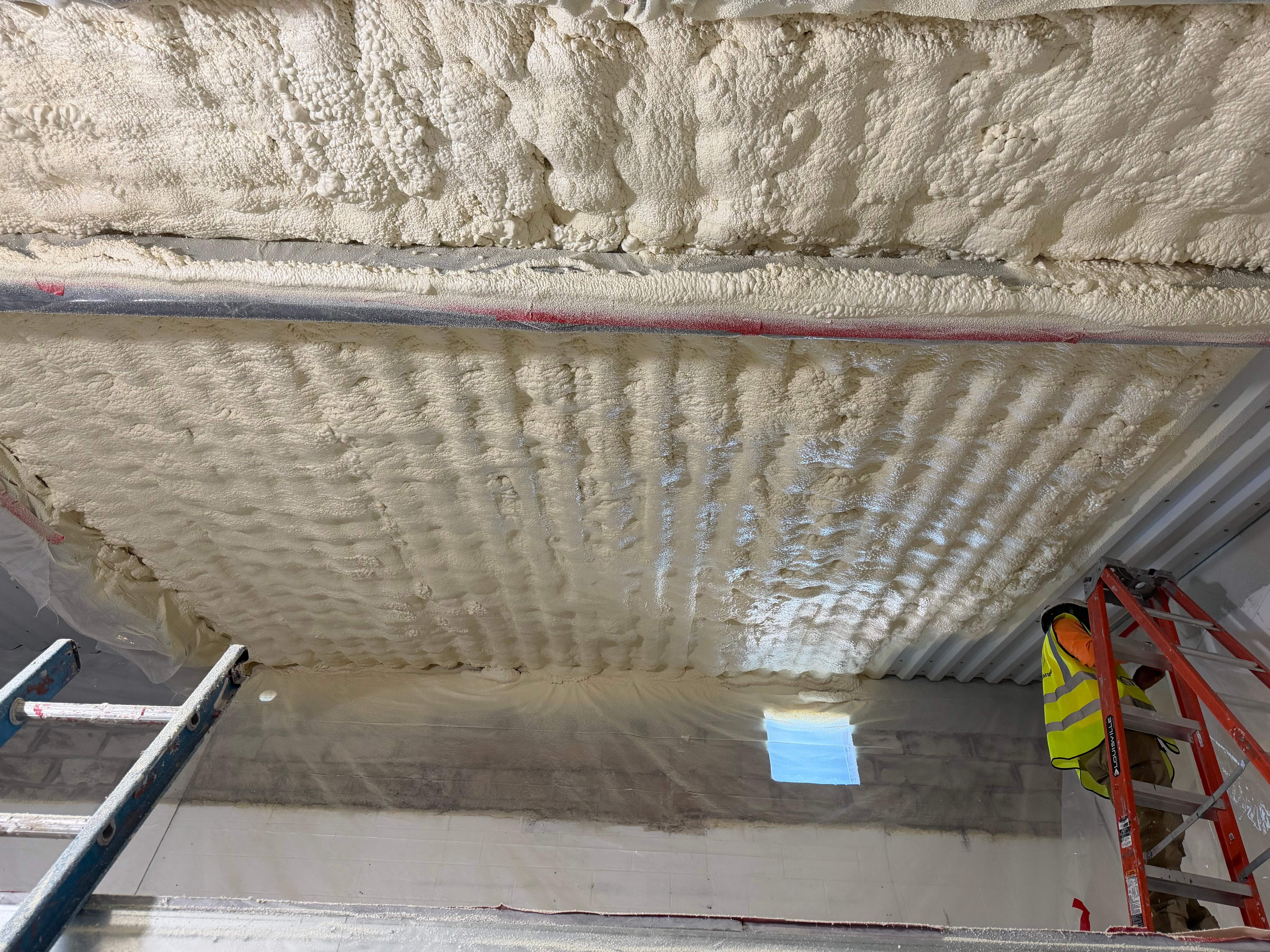
Intumescent coatings are applied to surfaces where a fire-rated assembly is required but traditional fireproofing is not practical. When exposed to heat, these coatings expand to form an insulating char layer that protects the underlying material.
We install intumescent coating systems such as No-Burn to meet thermal and ignition barrier requirements, particularly over spray foam insulation and exposed surfaces.
- Thermal and ignition barrier applications over spray foam systems
- Interior and exposed condition applications where aesthetics or space are considerations
- Expansion under heat to create a protective insulating layer
- Installed to meet code and manufacturer-specified thickness requirements
These systems are frequently required in mechanical spaces, ceiling cavities, and building envelope conditions where foam insulation is present.
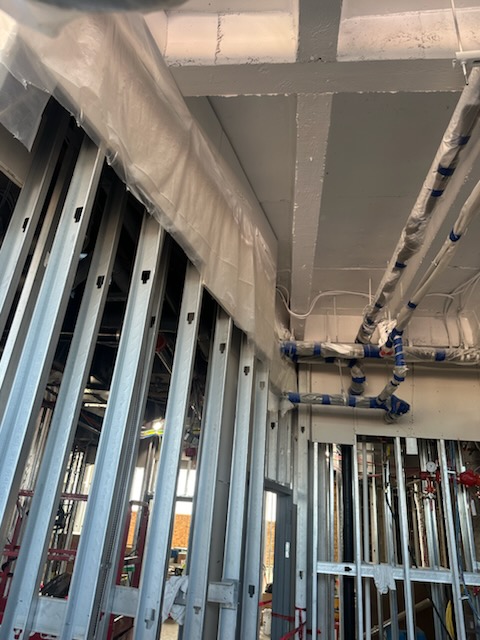
Underdeck Insulation Systems
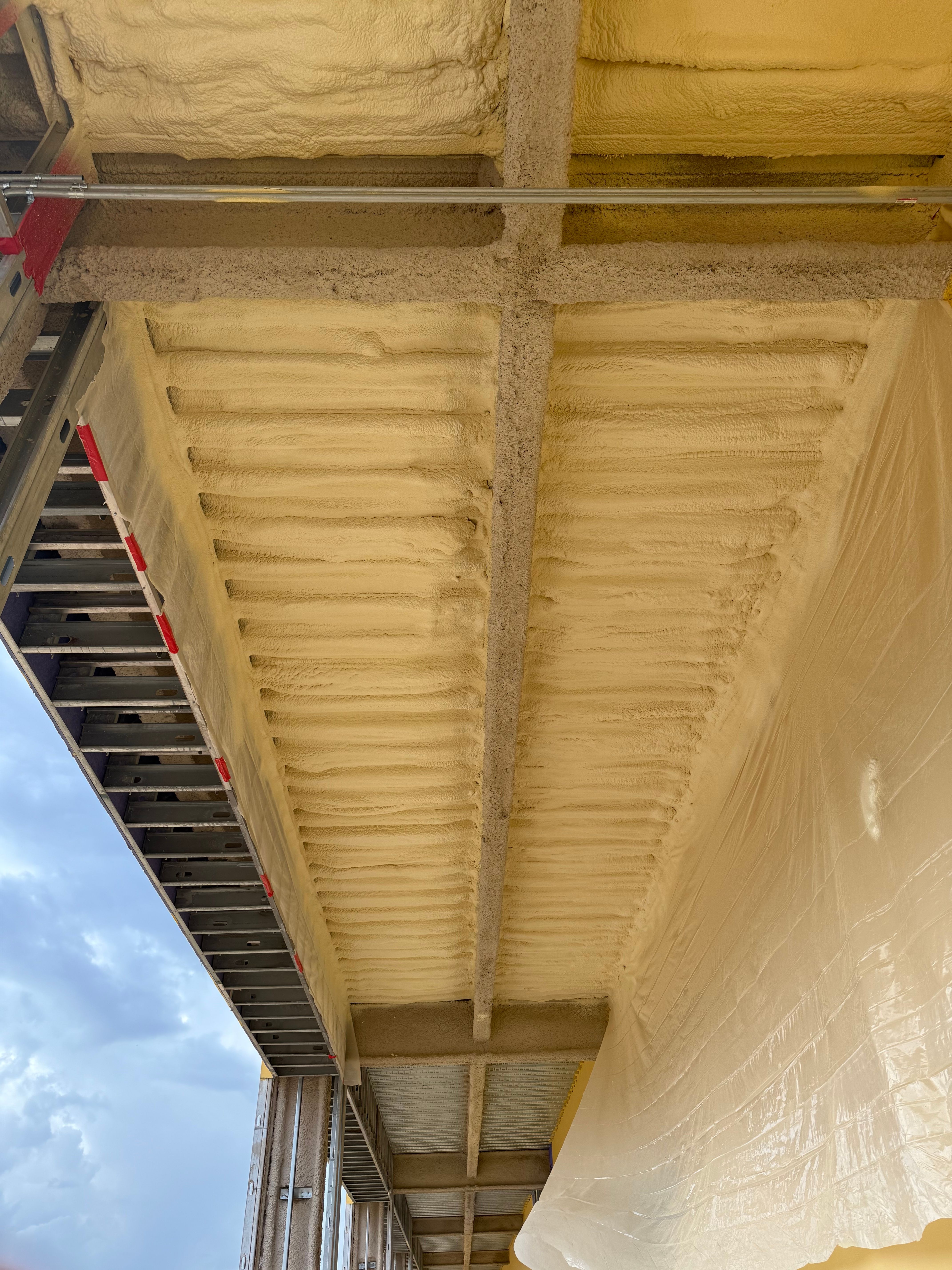
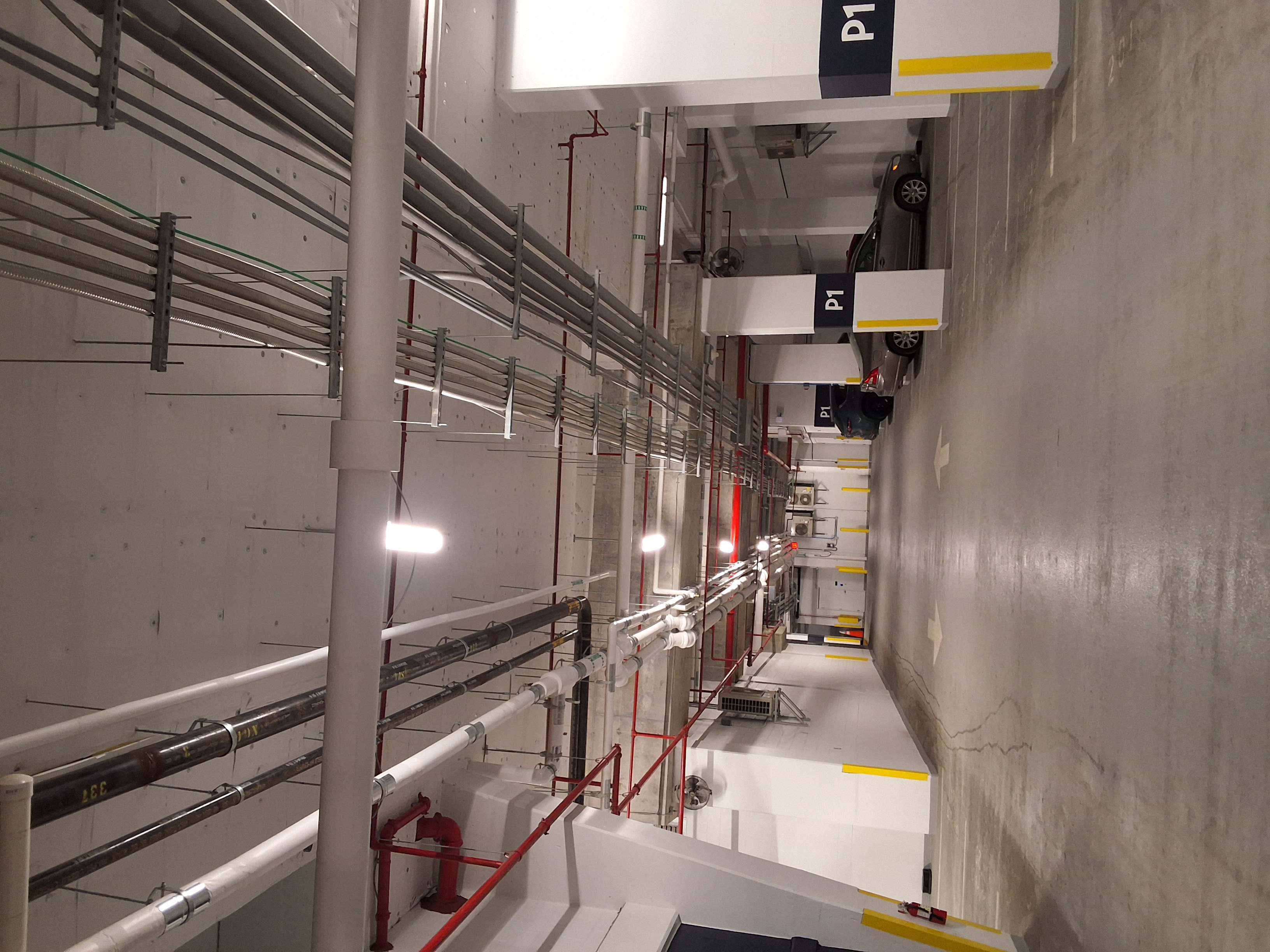
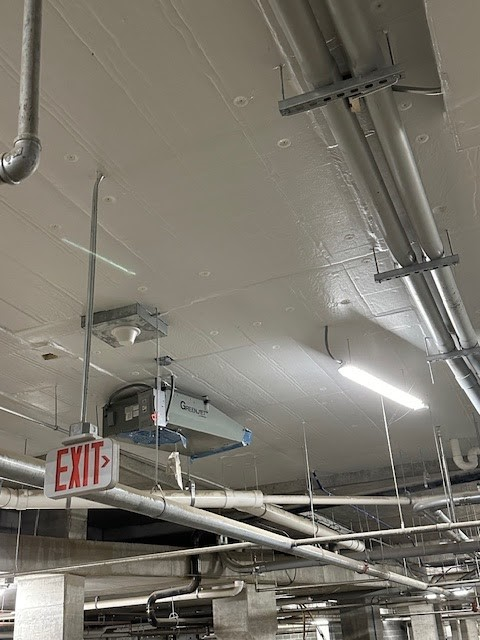
Underdeck insulation is typically installed on the underside of structural slabs, particularly in parking garages, loading areas, and exposed soffits where temperature control and condensation prevention are required.
These systems help prevent heat loss from conditioned spaces above and reduce condensation on the underside of slabs in high humidity or temperature differential conditions. Underdeck systems must be durable enough to withstand exposure, including moisture, temperature fluctuations, and potential physical damage.
- Common in parking structures, podium decks, and unconditioned spaces below occupied areas
- Helps control condensation and moisture buildup on slab surfaces
- Improves energy efficiency by reducing thermal loss through the slab
- Often requires coordination with fireproofing and coating systems
Rigid Board & Continuous Insulation (CI)
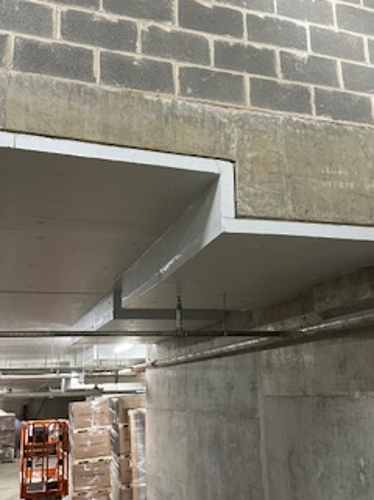
Rigid insulation systems are used to provide continuous thermal performance across the exterior of a building, significantly reducing thermal bridging through studs, framing, and structural elements.
These systems are a key component in meeting modern energy codes and are often required in commercial wall assemblies. Rigid boards are selected based on performance requirements, including compressive strength, fire resistance, and compatibility with other envelope components.
- Common materials include polyisocyanurate (polyiso), mineral wool, and XPS
- Installed on exterior wall assemblies as continuous insulation
- Reduces heat transfer through framing and structural members
- Works in conjunction with air barriers and cladding systems
Proper fastening patterns, board layout, and detailing at joints and transitions are critical to maintaining performance.
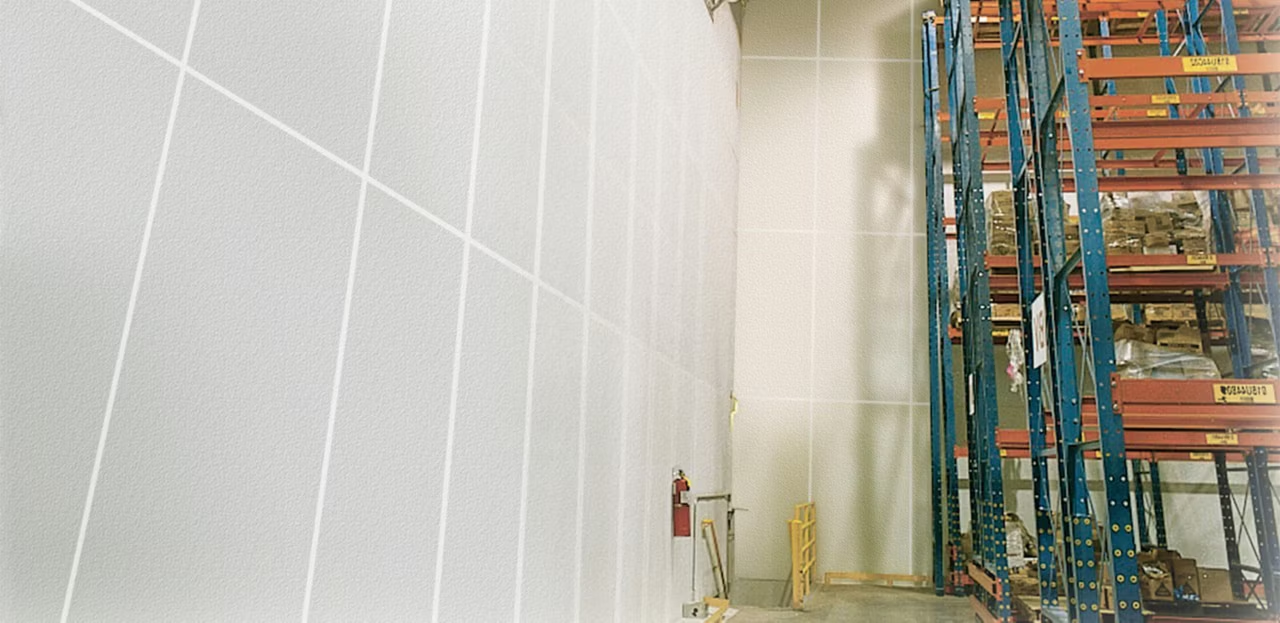
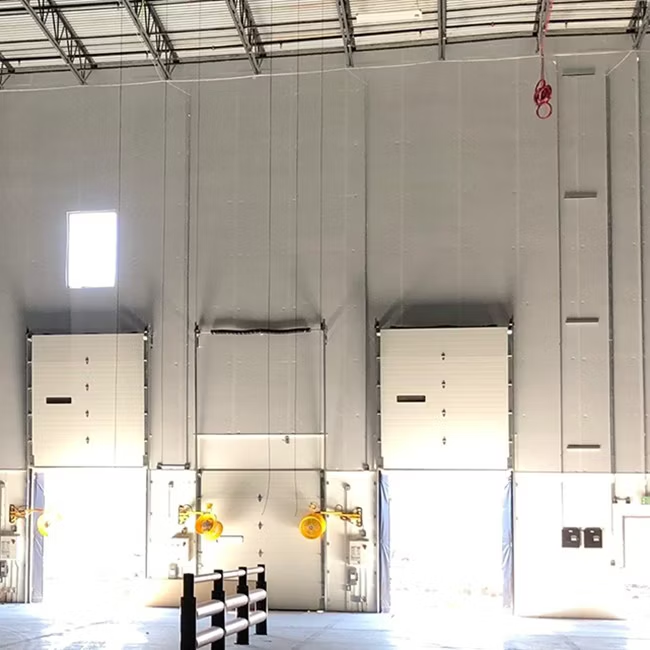
Dupont Thermax Heavy Duty
Semi-Rigid / Batt Insulation Systems
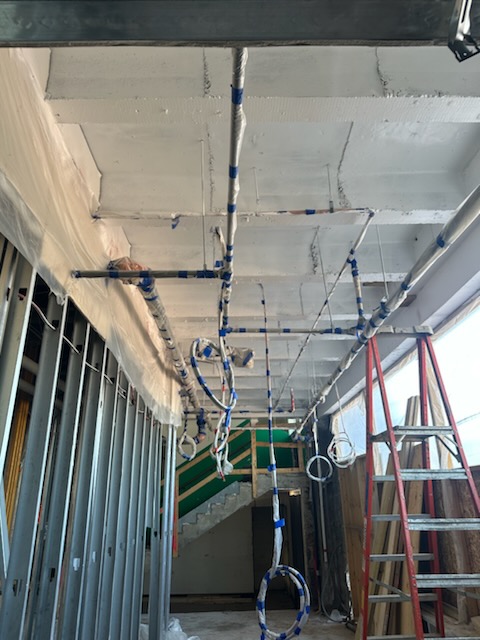
Semi-rigid and batt insulation systems are typically installed within framed wall assemblies to provide thermal and acoustic performance.
These systems are often used in combination with continuous insulation to achieve overall wall performance requirements. Proper installation is key—gaps, compression, or misalignment can significantly reduce effectiveness.
- Installed in stud walls, interior partitions, and cavity wall systems
- Provides both thermal insulation and sound attenuation
- Common materials include fiberglass and mineral wool
- Often paired with vapor retarders and air barrier systems
While these systems are straightforward, their performance depends heavily on proper fit and coordination with other envelope components.
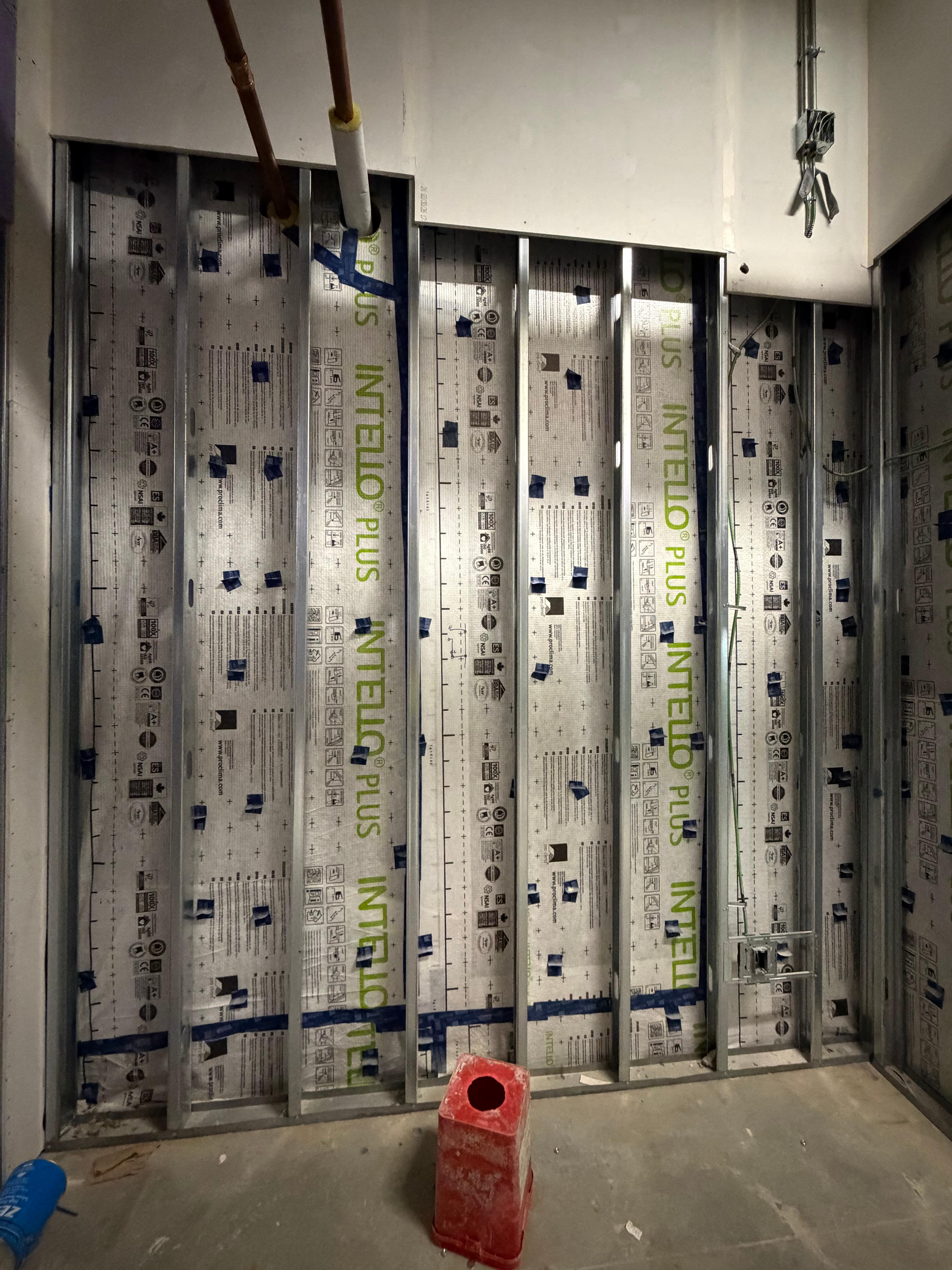
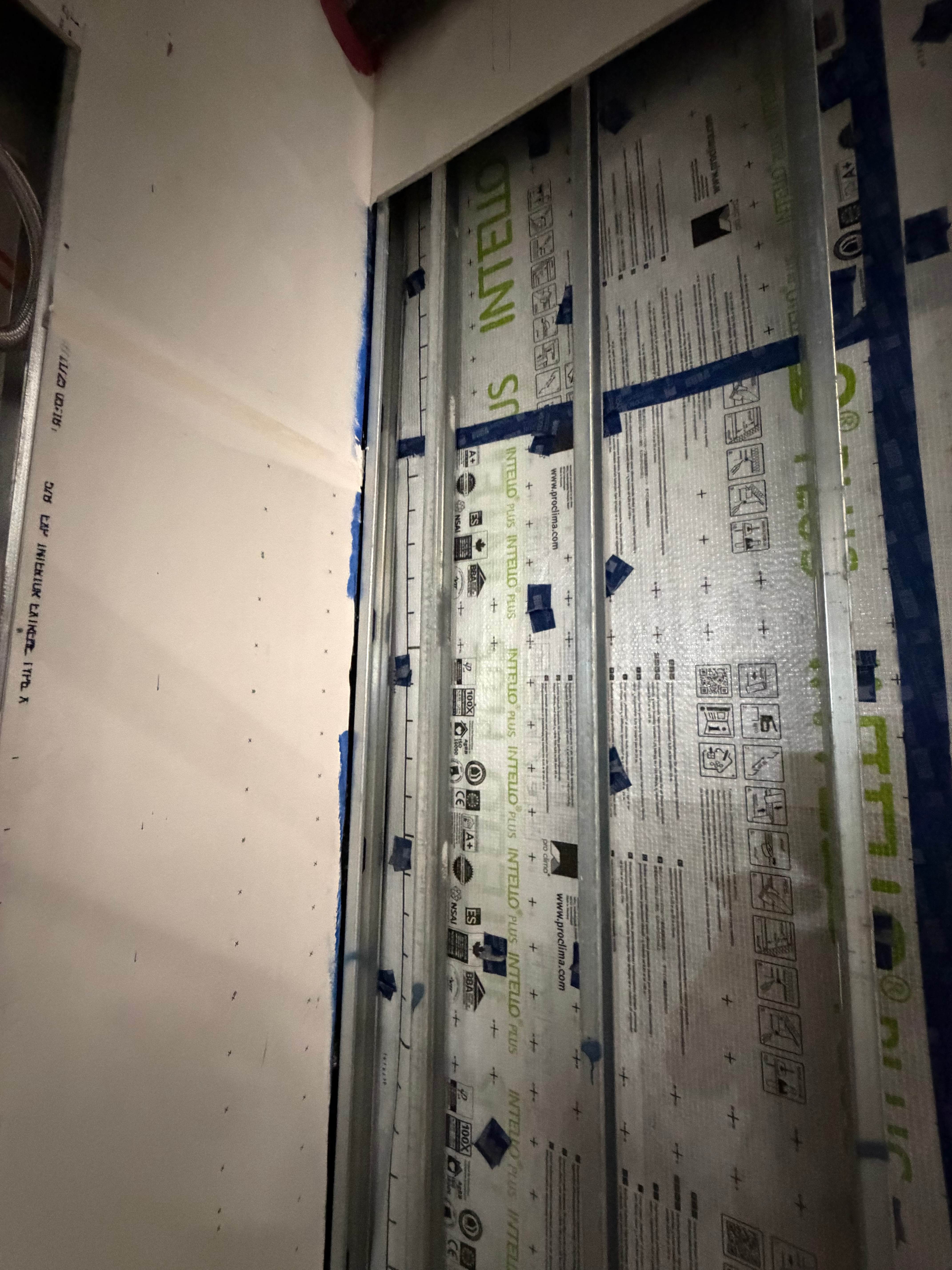
Pro Clima INTELLO PLUS Smart Vapor Barrier