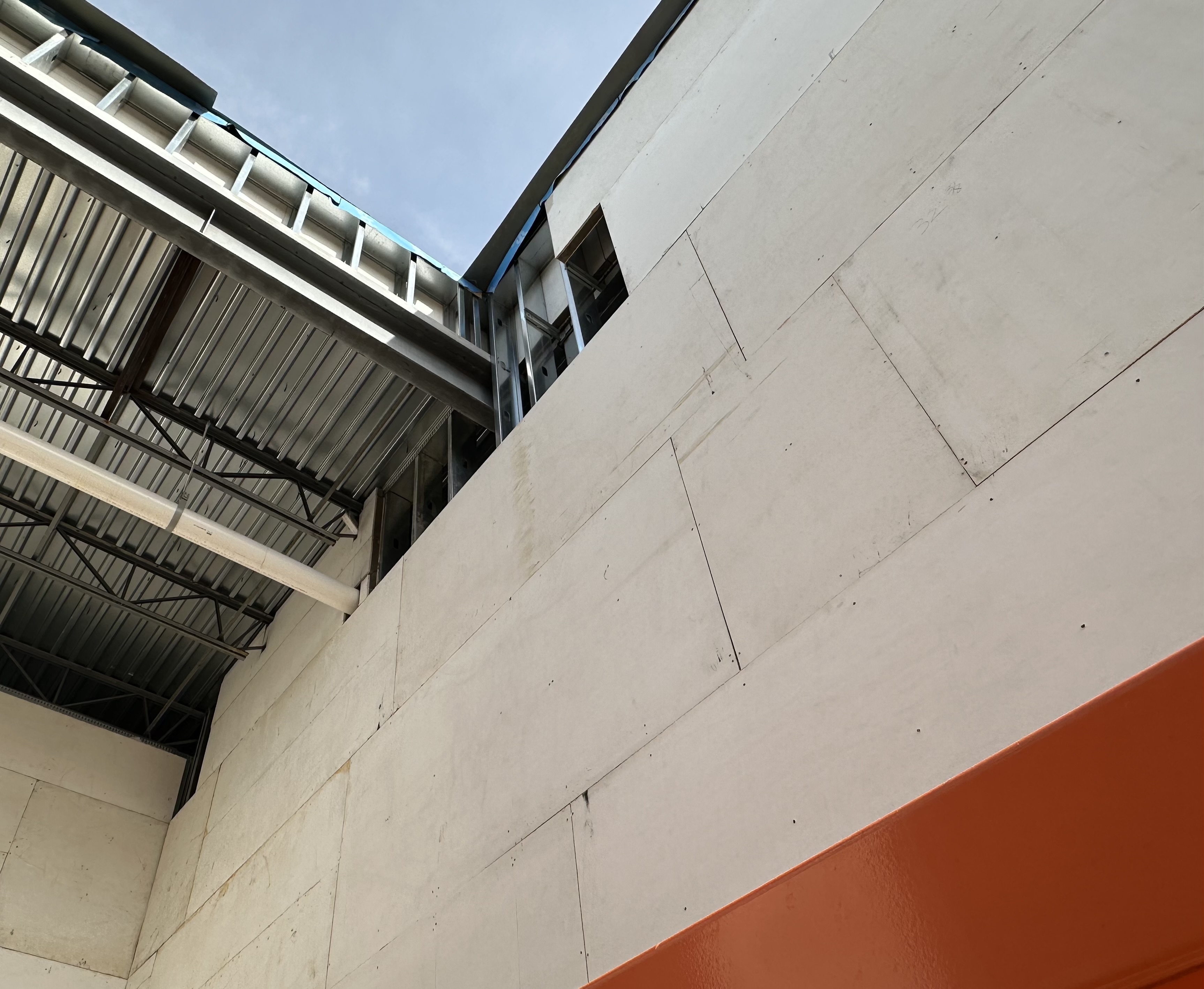
Structural Insulated Sheathing Systems
Commercial & Industrial Building Applications
Structural insulated sheathing systems combine exterior sheathing and continuous insulation into a single product, improving both thermal performance and installation efficiency. These systems are designed to streamline the building envelope by reducing the number of individual components while maintaining structural support, insulation continuity, and compatibility with air and water barrier systems.
Our Approach
We install structural insulated sheathing as part of a complete envelope approach, ensuring proper integration with framing, air barriers, cladding systems, and penetrations. These systems are commonly used in commercial buildings, institutional projects, and high-performance assemblies where energy code requirements and installation efficiency are key considerations.
Structural insulated sheathing impacts several trades. It must be included during the design stage, prior to bids to get the most efficient system and best price.
Engage us to compare the cost and schedule of SIS versus conventional construction.
What Structural Insulated Sheathing Does
Unlike traditional assemblies where sheathing and insulation are installed separately, structural insulated sheathing integrates both into one system. This reduces thermal bridging, simplifies installation sequencing, and helps maintain consistent performance across the wall assembly.
These systems are typically used in place of standard exterior gypsum or wood sheathing combined with rigid insulation.
- Provides continuous insulation across the exterior wall assembly
- Eliminates thermal bridging through studs and structural framing
- Acts as a structural substrate for air barrier and cladding attachment
- Streamlines installation by combining multiple steps into one system
Typical Applications
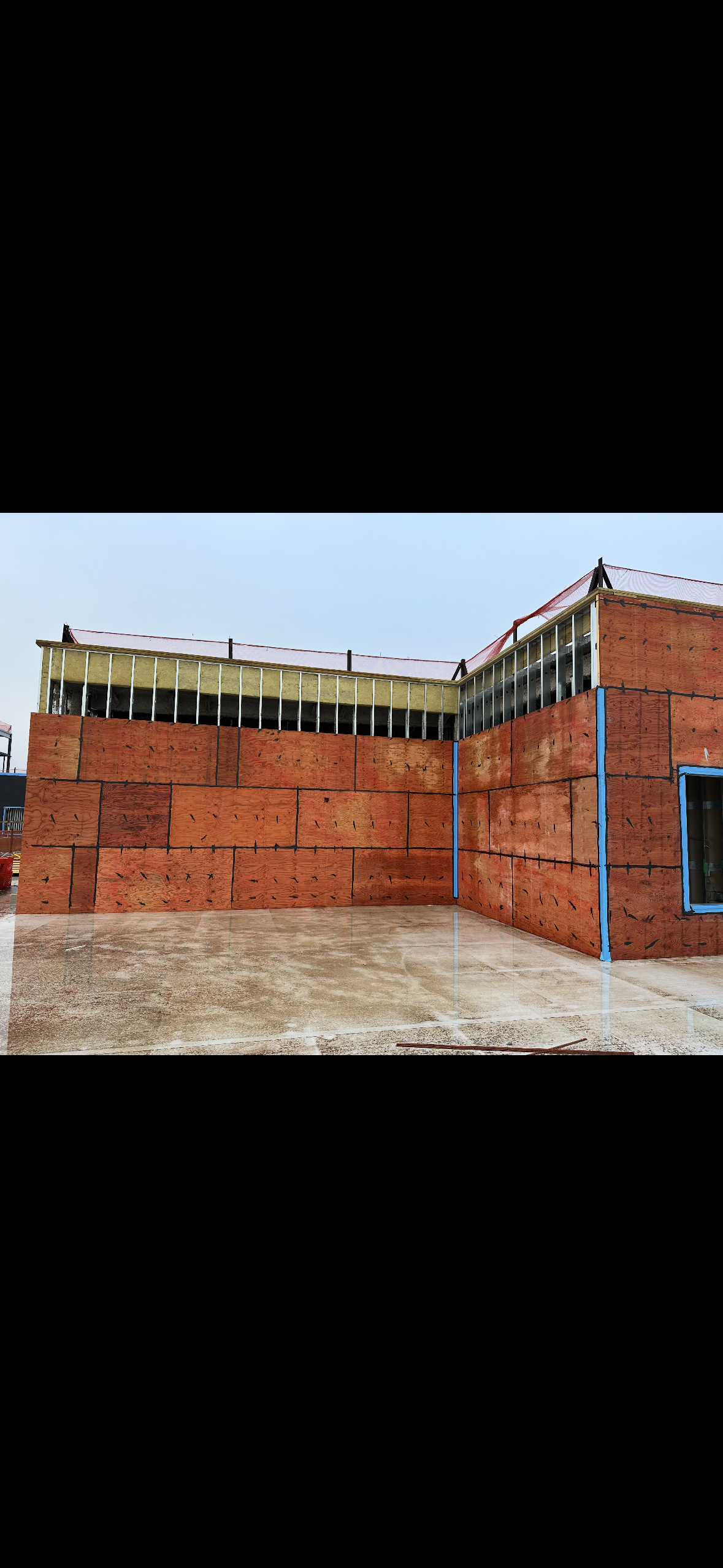
Structural insulated sheathing is used in a variety of wall assemblies where both thermal performance and structural support are required.
- Steel stud and wood-framed wall assemblies
- Commercial and institutional building exteriors
- Multi-family and mixed-use developments
- Projects requiring continuous insulation to meet energy codes
These systems are especially useful on projects with tight schedules, as they reduce the number of installation steps and trades involved in the wall assembly.
System Integration & Coordination
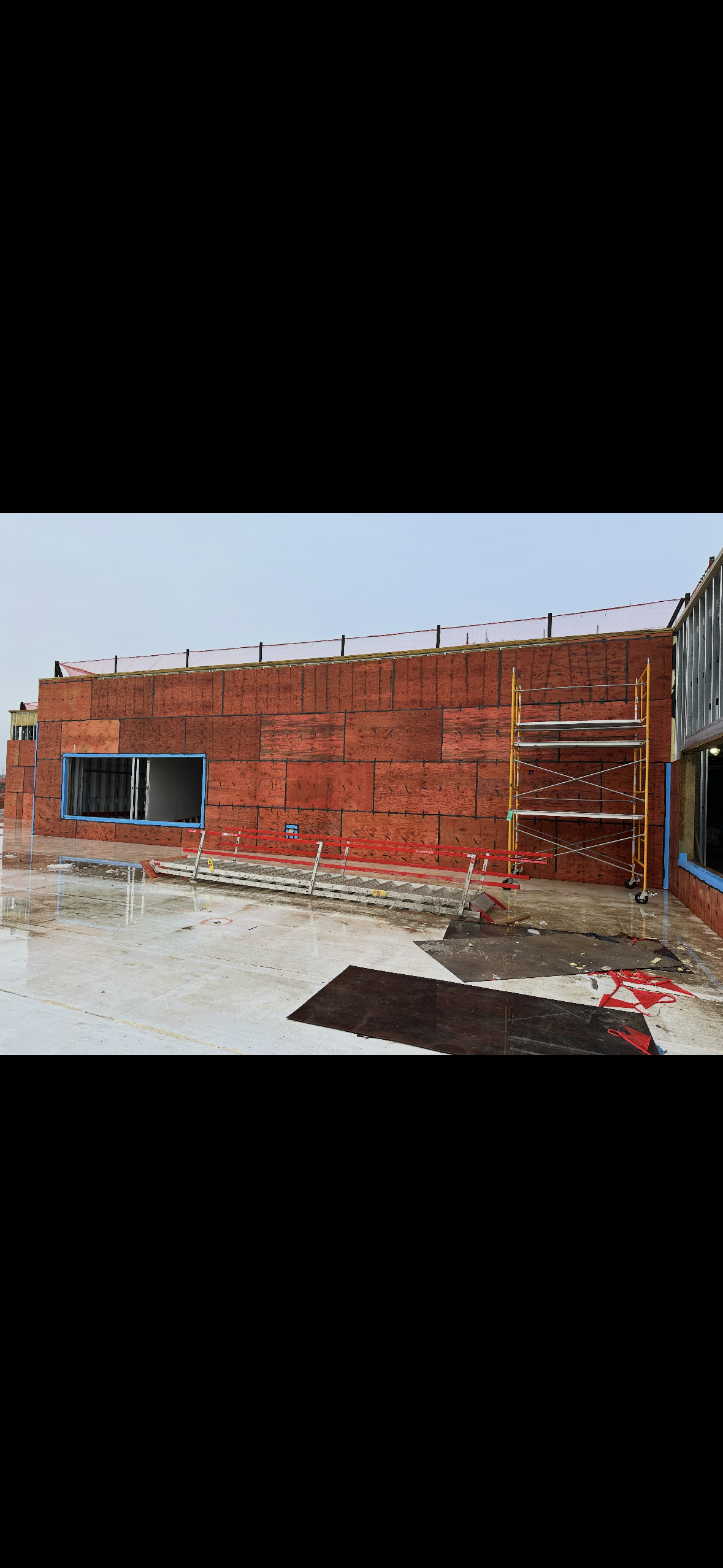
Proper installation of structural insulated sheathing requires coordination with multiple components of the building envelope. While the sheathing provides structure and insulation, it must still be integrated with air and water barrier systems to ensure full performance.
We focus on detailing and transitions to maintain continuity across the entire assembly.
- Coordination with fluid- or sheet-applied air barrier systems
- Proper treatment of joints, seams, and fastener penetrations
- Integration at windows, doors, and other openings
- Alignment with cladding attachment systems and support structures
Because these systems replace traditional sheathing layers, attention to fastening patterns, joint detailing, and sequencing is critical.
Performance Benefits
Structural insulated sheathing systems provide a range of performance advantages when installed correctly as part of a complete envelope system.
- Improved thermal performance through continuous insulation
- Reduced installation time compared to multi-layer assemblies
- Fewer trade overlaps and simplified sequencing
- Consistent substrate for air barrier application
These benefits make them a strong option for projects where energy performance, speed, and coordination are priorities.
Our Installation Approach
We install structural insulated sheathing systems with a focus on proper sequencing, attachment, and integration with the full building envelope.
- Substrate preparation and layout planning
- Manufacturer-compliant fastening and installation
- Coordination with air barrier, insulation, and cladding systems
- Inspection and quality control to ensure system performance
By treating structural insulated sheathing as part of a complete system—not just a product—we help ensure the wall assembly performs as intended over the life of the building.
Interested in SIS for Your Project?
Let our team evaluate whether SIS is right for your next build.